How Rewardy Wallet Scaling from 450,000 Users to More Than 1 Million?

TL;DR
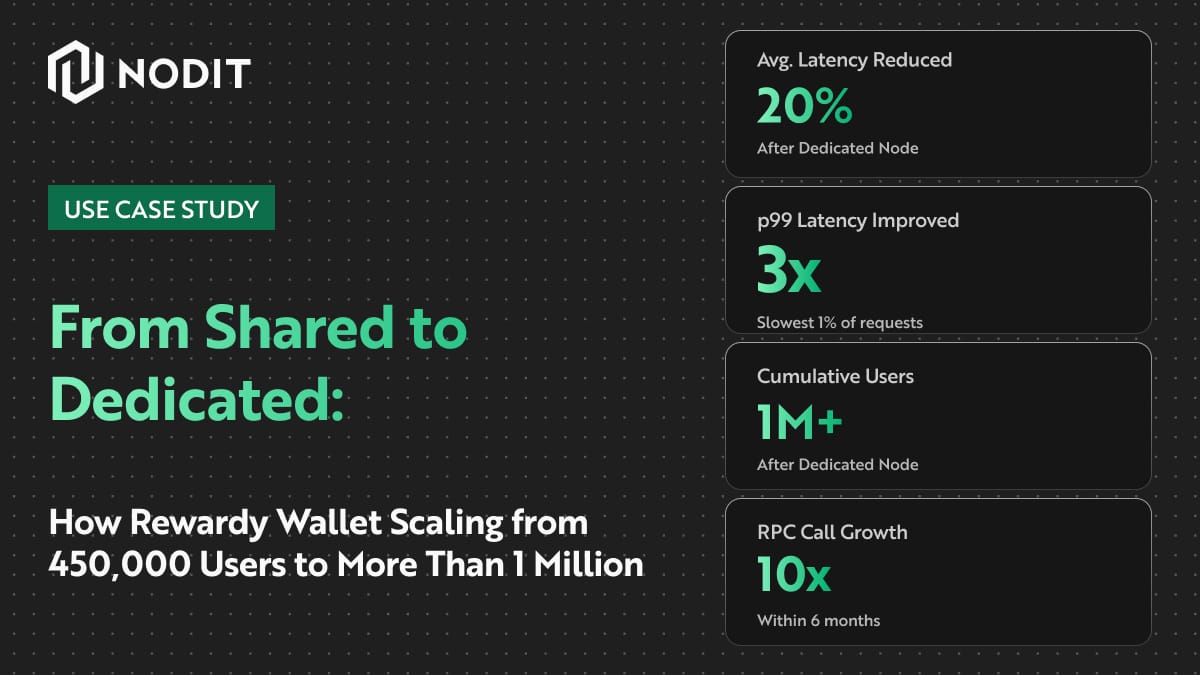
- Rewardy Wallet increased blockchain API call volume by approximately 10x and reached 1 million cumulative users within a year.
- After upgrading to Dedicated Node, overall response times improved and the experience for previously delayed users changed noticeably.
- With reserved throughput, performance variability from neighboring workloads was eliminated, and campaign traffic became predictable in advance.
- Support inquiries related to delayed responses, missing balances, and pending transactions declined after the upgrade.
Reaching 1 million cumulative users rarely comes down to a single factor. For Rewardy Wallet, growth was fueled by expansion into overseas markets, ongoing UX improvements, and a series of on-chain campaigns that attracted and retained users. Infrastructure was another part of that story.
As the platform scaled, the team recognized that supporting a larger and more active user base required a different level of reliability. That recognition led them to upgrade from Nodit's Shared Node to Dedicated Node as part of their growth strategy.
About Rewardy Wallet
Rewardy Wallet is a reward-based Web3 wallet where users earn rewards through community activity. The app supports Ethereum, Solana, Aptos, Tron, and Bitcoin in a single interface and has grown its user base steadily since launch.
The team started on Nodit's Shared Node plan. As overseas expansion and on-chain campaign operations scaled up, cumulative users grew from 450,000 to 1 million. Blockchain API call volume increased approximately tenfold over the same period.

The Problem: Response Quality Under Growing Traffic

As user volume grew and campaigns like the Gold Mining Promotion ran more frequently, maintaining consistent response times became harder. During periods of concentrated traffic, balance checks and swap operations started returning delayed responses on a recurring basis.
System monitoring showed no significant anomalies. Certain users experienced something different. The service felt unreliable, and support inquiries related to delayed responses, missing balances, and pending transactions came in steadily.
The root cause was resource contention with other services on shared infrastructure. The team had been managing it through code-level exception handling. Eventually, they decided that approach had a ceiling and chose to upgrade to a dedicated node.
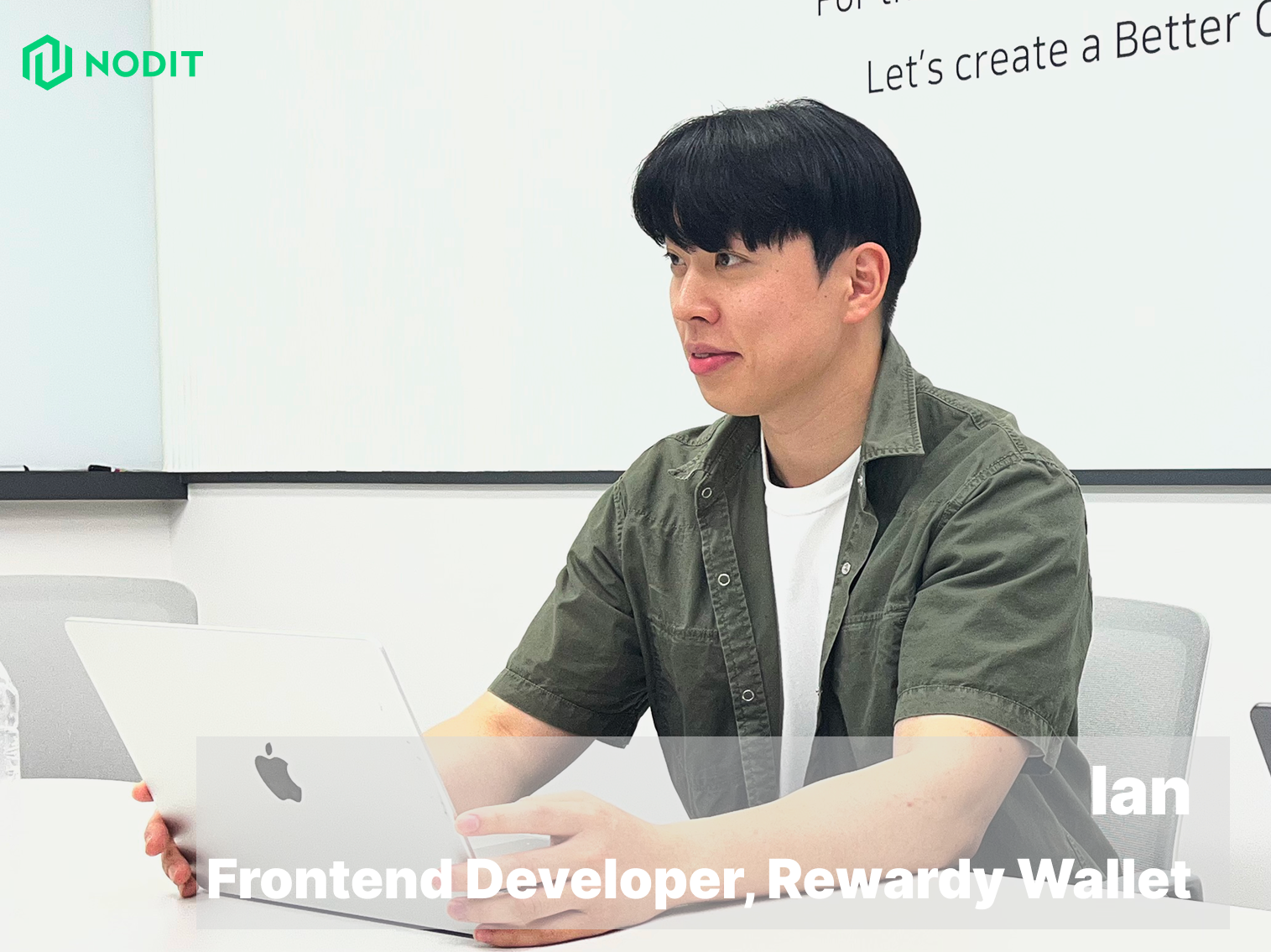
"The biggest reason was eliminating unnecessary defensive code. Once stability was guaranteed, we no longer had to build exception handling into everything. We could develop and operate a much more stable service." — Ian, Frontend Developer, Rewardy Wallet
What Changed After the Upgrade
Improvement 1: Response Latency in Delayed Segments
Overall response speed improved by approximately 20%. The more meaningful change was in the segment that had been seeing repeated delays. Response times there improved roughly threefold, and users who had waited 8 to 10 seconds stopped hitting the same wall. Fewer user-facing issues meant less operational load on the team as well.
Improvement 2: Predictable Campaign Operations
With dedicated capacity, campaign planning got simpler. Traffic spikes no longer borrowed from a shared pool, and the recurring pre-launch question ("can the infrastructure handle this?") stopped coming up. Support tickets related to slow responses, missing balances, and pending transactions dropped, and so did operational workload during campaign windows.
When to Consider Upgrading to Dedicated Node
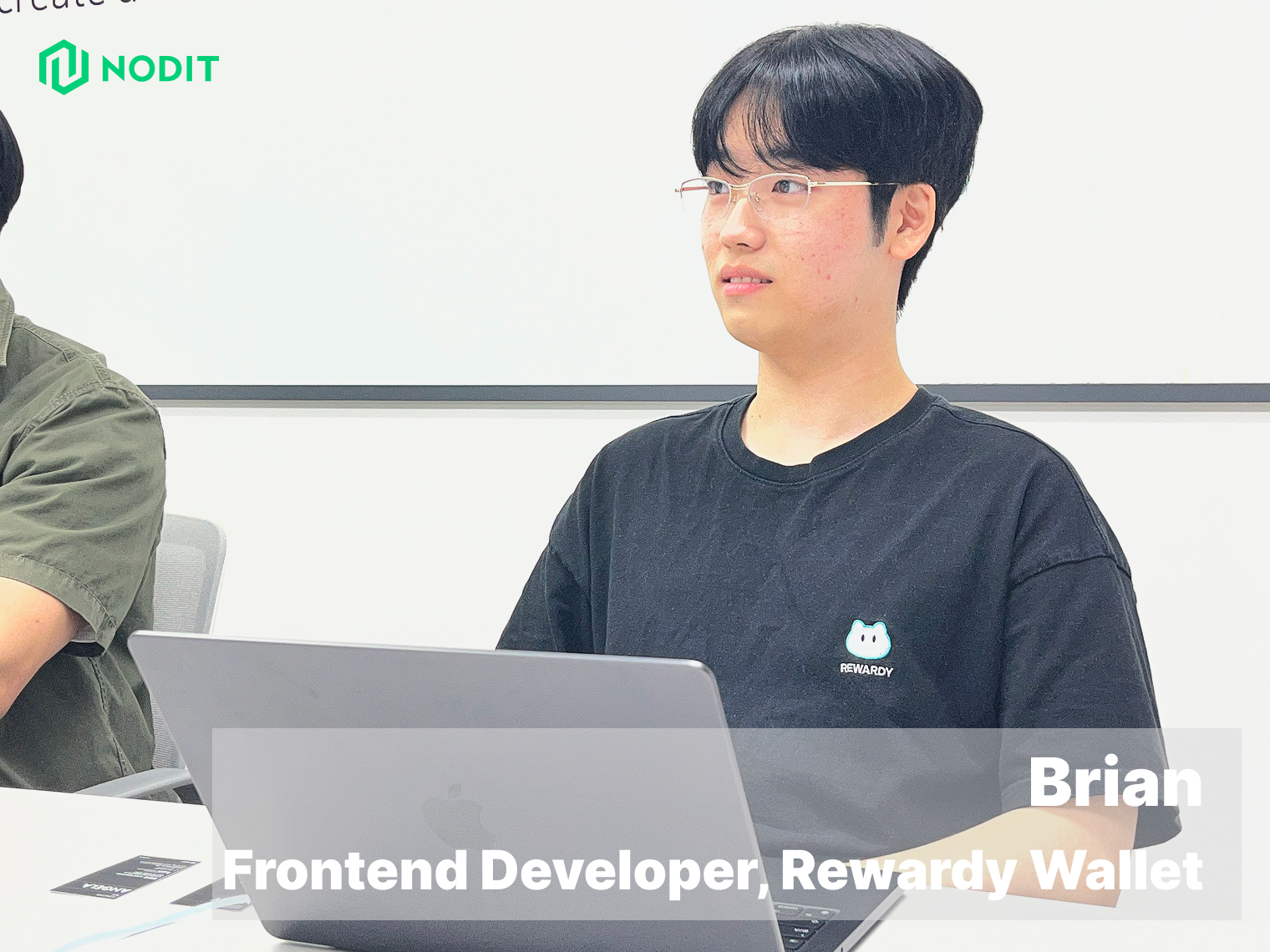
"When infrastructure starts getting in the way of product development, that is the moment to make the move. If response times are driving user drop-off and you know the infrastructure is the fix, there is no reason to wait." — Brian, Frontend Developer, Rewardy Wallet
A few situations where Dedicated Node tends to become relevant:
- Multi-chain services with sustained traffic across several networks
- Products where latency in the slower percentiles is starting to drive real churn
- Services running frequent campaigns that require predictable capacity, not reactive adjustment
For earlier-stage services running single-chain, read-heavy workloads, Shared Node remains a practical starting point. Upgrading to Dedicated is a decision that fits when operational requirements have outgrown what shared infrastructure can reliably provide.
Technical Support
When an anomaly appeared in Rewardy Wallet's production environment, the team had a root cause assessment back within five minutes, in Korean, during Korean business hours.
Teams that have dealt with overseas infrastructure providers know what the alternative looks like: filing a ticket in English and waiting across time zones while the service is still affected. In institutional environments the stakes are higher. Incident response connects to internal reporting, customer notifications, and in some cases regulatory obligations. Support responsiveness stops being a nice-to-have and becomes part of how operational risk gets managed.
When Infrastructure Can't Keep Up With Growth
At 1 million users, a blockchain wallet processes millions of balance checks and transactions daily. At that volume, 1% of requests running slow means tens of thousands of users affected.
Rewardy Wallet's experience shows that infrastructure strategy needs to move with the user base, not trail behind it. When campaigns are frequent and acquisition is accelerating, the reliability of the underlying infrastructure shapes what the product can and cannot do.
For more on Nodit's Dedicated Node plan, details are below.
🔗 Learn more about Nodit Dedicated Node:
https://www.nodit.io/products/dedicated-clusters
🤝Contact our sales team:
https://www.nodit.io/contact-us
🔎About Nodit
Nodit is an enterprise-grade Web3 platform that provides reliable node and consistent data infrastructure to support the scaling of decentralized applications in a multi chain environment. The core technology of Nodit is a robust data pipeline that performs the crawling, indexing, storing, and processing of blockchain data, along with a dependable node operation service. Through its new Validator as a Service (VaaS) offering, Nodit delivers secure, transparent, and compliant validator operations that ensure stability, performance visibility, and regulatory assurance.
By utilizing processed blockchain data, developers and enterprises can achieve seamless on chain and off chain integration, advanced analytics, comprehensive visualization, and artificial intelligence modeling to build outstanding Web3 products.